
Deed Types in Anne Arundel County Records
Deed records for Anne Arundel County sit with the Circuit Court land records. Every deed names who transferred, who received, and what real estate changed hands. It also declares the form of conveyance. That label matters. Not every instrument carries the same promise, and not every one comes from an ordinary sale.
| Deed Type | What It Does | Common Use |
|---|---|---|
| Warranty deed | Conveys the stated interest with title promises written into the instrument | Conventional sale |
| Quitclaim deed | Conveys whatever interest the grantor has without the same warranties | Family transfer or title cleanup |
| Trustee deed | Conveys property through a trustee acting under stated authority | Trust or foreclosure-related transfer |
| Personal representative deed | Conveys estate property under probate authority | Estate administration |
| Confirmatory deed | Corrects or confirms details in an earlier recorded conveyance | Name or description correction |
The index mixes more than deeds. Mortgages, releases, judgments, easements, and liens can appear beside them. None of those is an ownership transfer. The document merely touches the parcel. A 2026 tax-sale certificate works the same way: it is a lien, not a deed. Redemption, a foreclosure judgment, and any later conveyance each generate their own record events.
Read the granting language and signature capacity instead of trusting the index label alone. A trustee, personal representative, attorney-in-fact, or business officer acts under authority. The instrument may state or cite it. Some deeds reserve an easement, impose restrictions, or fold in an earlier plat. Those details can matter more to the chain of title than the broad document category. Keep the full image. Keep every recording citation the instrument references.
Searching MDLandRec for Anne Arundel County Deeds
Maryland Land Records, known widely as MDLandRec, is the official online route to Anne Arundel County deeds. It requires a free account. Anyone who used the prior system must create a new one after the fall 2025 portal transition. Always select Anne Arundel County before searching. That way, similarly named parties elsewhere in Maryland stay out of your results.
| Search control | Useful entry | Why it helps |
|---|---|---|
| Party and role | Grantor or grantee name | Finds transfers to or from a person or entity |
| Book and page | Liber and folio from SDAT or a later deed | Opens a known recording reference |
| Instrument | Recorded instrument number | Targets a specific modern filing |
| Date range | Expected recording window | Narrows common names and repeat parties |
| Cross-reference | Reference shown in another instrument | Connects releases, corrections, and related filings |
The county, name, and book-page interface pictured here separates a broad name search from a lookup by a known deed reference.
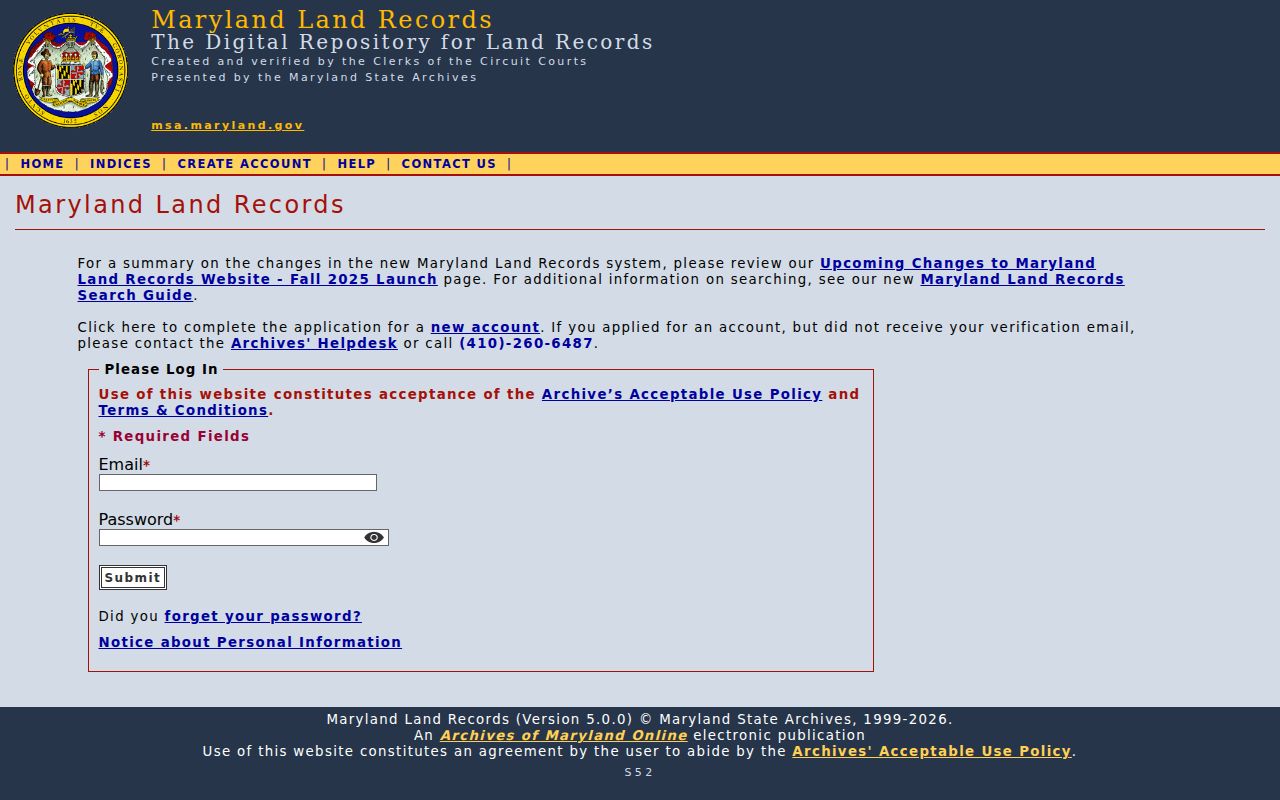
Hold onto more than the deed itself. Keep the county, party role, date range, and instrument type with each result. Note the liber and folio too. Image availability matters as well. The transfer or recording date can differ from the settlement date.
Try names in every form the record might use. A prior surname can unlock a missing link. So can initials, a trust name, or the exact business entity. Narrow common names with the recording window, document type, and parcel description. Never assume two people sharing a name are the same party. Maryland Business Express can confirm an entity's legal name and Department ID. But the deed itself remains the source for the conveyance.
Walk the Anne Arundel County Grantor-Grantee Index
The grantor-grantee index ties every person and entity to its recorded instrument. Start from a known current deed. Then work backward one transfer at a time. A name alone proves little, so match it against the parcel description, the dates, the deed reference, and the next link in the chain.
- Find the present deed by its SDAT deed reference or by searching the current grantee.
- Read the grantor, legal description, consideration, recording date, and any prior deed citation.
- Search that grantor as an earlier grantee, then confirm the same land description.
- Repeat the process, preserving each liber/folio or instrument number and noting gaps.
- Move to the courthouse, microfilm, or Archives series when the online image trail stops.
- Grantor
- The party transferring the stated interest.
- Grantee
- The party receiving the stated interest.
- Chain of title
- The ordered sequence of instruments affecting ownership of the same land.
- Book/page and instrument number
- Two recording references used to locate a filed document.
Anne Arundel County Deed References Start on the SDAT Card
The SDAT Real Property Search often forms the best bridge from an address to deed records. Its Owner Name field comes from the last recorded deed. It may display only the first line. The same parcel card carries the deed reference, transfer date, and sale information. It also shows the premises address, Town field, and account identifiers.
SDAT's field definitions explain what the owner, deed, transfer, value, and use labels mean. The glossary is especially helpful. A parcel result sometimes applies similar labels to different dates or amounts.
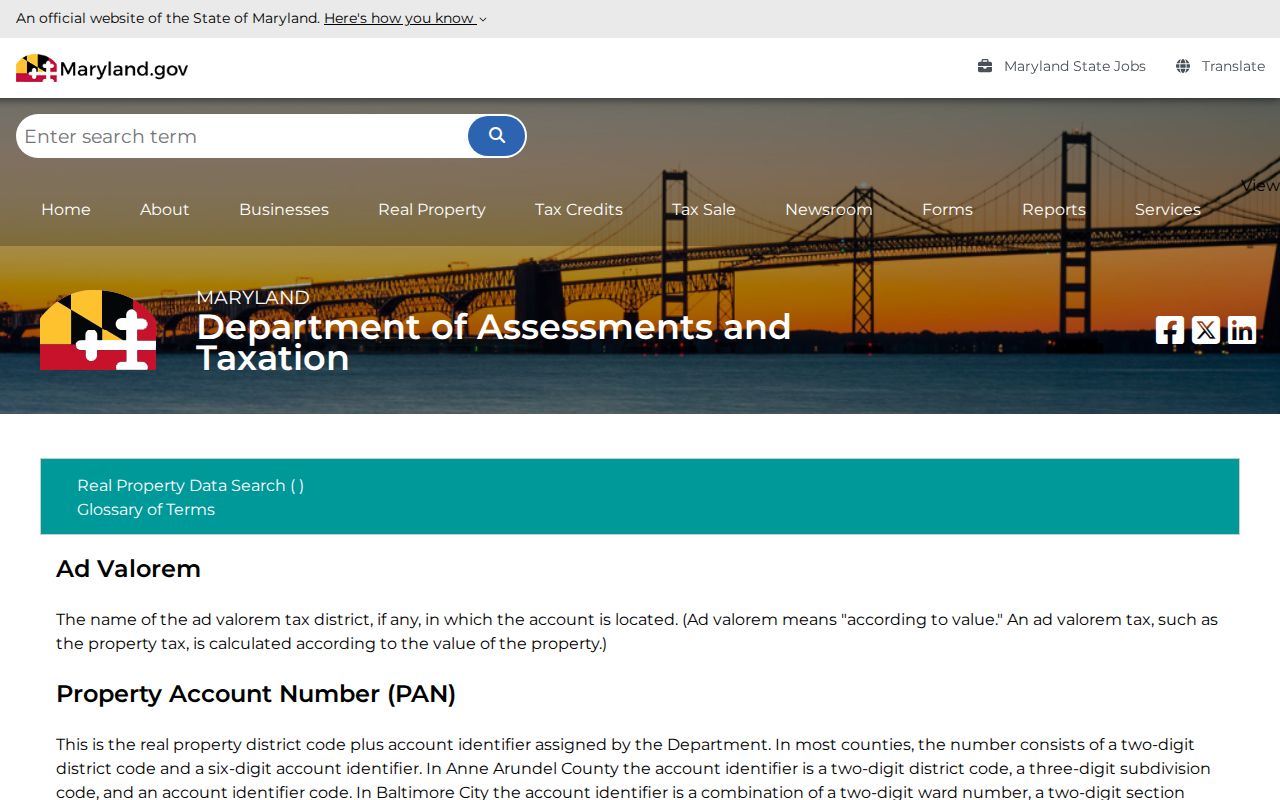
Carry that reference into MDLandRec. Pull up the deed image. A refreshed assessor account can lag behind a newly recorded instrument, so the live deed index remains the stronger check for a recent transfer.
Recorded Plats Complete an Anne Arundel County Legal Description
A deed often names a lot, block, subdivision, road, right-of-way, or earlier plat. It rarely draws the parcel itself. The Maryland State Archives Anne Arundel County plat portal uses qualifier AA. It supports searches by book and page, plat or box number, date, description, series, and right-of-way.
The county-copy C2081 series spans 1863 through 1931. The S1235 subdivision series begins in 1866. Other series cover roads, acquisition, drainage, wetlands, and sanitary districts. A series range does not promise that every sheet is indexed or imaged online. Expect some gaps.
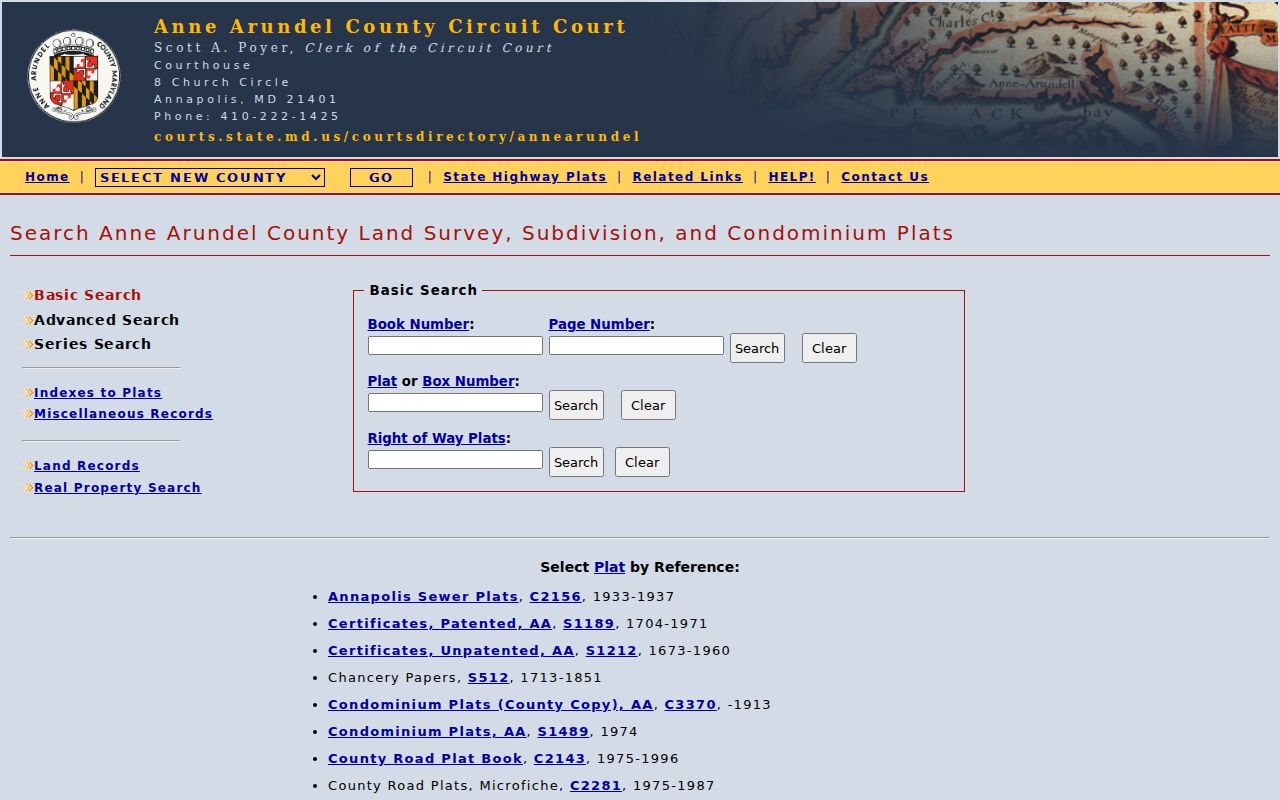
The portal image shows why a plat citation belongs beside the deed reference. A mapped line is valuable evidence, but it is not a survey of present field conditions.
Anne Arundel County Land Records Reach Past the Modern Index
Anne Arundel County land-record material reaches back to 1653 in the Maryland State Archives finding aids. The colonial-era holdings sit alongside the modern ones. Circuit Court land records carry the series codes CE76, CE59, and C98. Grantee and grantor series are CE72 and CE74. Abstracts appear as S1312, and the tract index is S1444. Older patent, plat, and court-book material rounds out the collection.
The online portal's data range starts on July 1, 1967. That date is only an online cutoff. It says nothing about where local title history actually begins. The Archives guide extends into the colonial period. A serious historic chain deserves a real citation. Record the series, container, unit, page, and image rather than leaning on a web search result.
When an online chain hits its apparent end, open the last available deed. Its recitals may point to earlier instruments, tract names, patents, subdivision plats, or estate proceedings. Archives combined guides also map the microfilm and original counterparts. These include land-record, grantee, grantor, abstract, and tract-index series. A finding-aid date range tells you where to look. It does not promise that every year or page survives. Before calling a stretch a gap, check whether fire loss explains it. An unindexed volume, unavailable imagery, or simply an unsuccessful name search may explain it too.
The Annapolis Fire Explains Some Early Deed Gaps
Some gaps in Anne Arundel County deed records have a documented cause. Archives material for series S1212 records that the Annapolis fire destroyed pre-1704 documents. So a failed search in that period is not proof a transfer never occurred.
Later deeds often recite the earlier ownership path. Patents, tract indexes, abstracts, court books, and plats can each preserve a separate clue. The Anne Arundel County Public Library Maryland Room and the Kuethe Historical and Genealogical Research Center add local-history context as well. Still, a directory entry or local account never replaces a recorded conveyance.
Ways to Reach Anne Arundel County Land Records
Online access is one channel among several. Match the route to the document, the date, and the level of authentication you actually need from Anne Arundel County.
- Use MDLandRec for the modern index and available images after creating a free account.
- Visit or contact the Anne Arundel County Circuit Court Land Records Department for counter help and copies.
- Use Maryland State Archives finding aids and request the identified series when older material is offline.
- Submit a focused Maryland Public Information Act request for identifiable county-held land-use material, not for a new title report.
- Consult the public library's Maryland Room or Kuethe collections for directories and property-history context.
Land-record copies in Anne Arundel County generally run $0.50 per page. Certification adds $5 per land document. Ask for an estimate before submitting a broad request. Requests that need archive research or many pages can carry unexpected weight.
Mail or counter requests work best with the complete recording citation. For an older volume held by the Archives, include the series and container. Add the date span and party names. Include any page reference taken from a later deed. Library local-history collections can resolve old street names, occupants, or businesses in Anne Arundel County. Keep that context separate from the recorded chain of ownership, though. A directory entry is not a conveyance.
Order an Anne Arundel County Deed Copy
Pin down the exact instrument first. Then give the clerk the county, the liber/folio or instrument number, party names, record date, and whether you want certification. A plain image suits personal research fine. A certified copy carries the clerk's certification for any official use that demands one.
Recorded, not guaranteed. The index reports filed instruments, not every possible interest, defect, or off-record claim. A records search is not a title opinion.
If no image exists online, ask the Land Records Department or the Archives directly. Request the referenced volume by its citation. A precise reference is faster. It is also cheaper than asking a custodian to investigate an Anne Arundel County property with no record target. Keep the certified copy request and receipt with your chain notes. Together they document which instrument was supplied. They also show when it was obtained. They confirm whether certification covered the whole document.